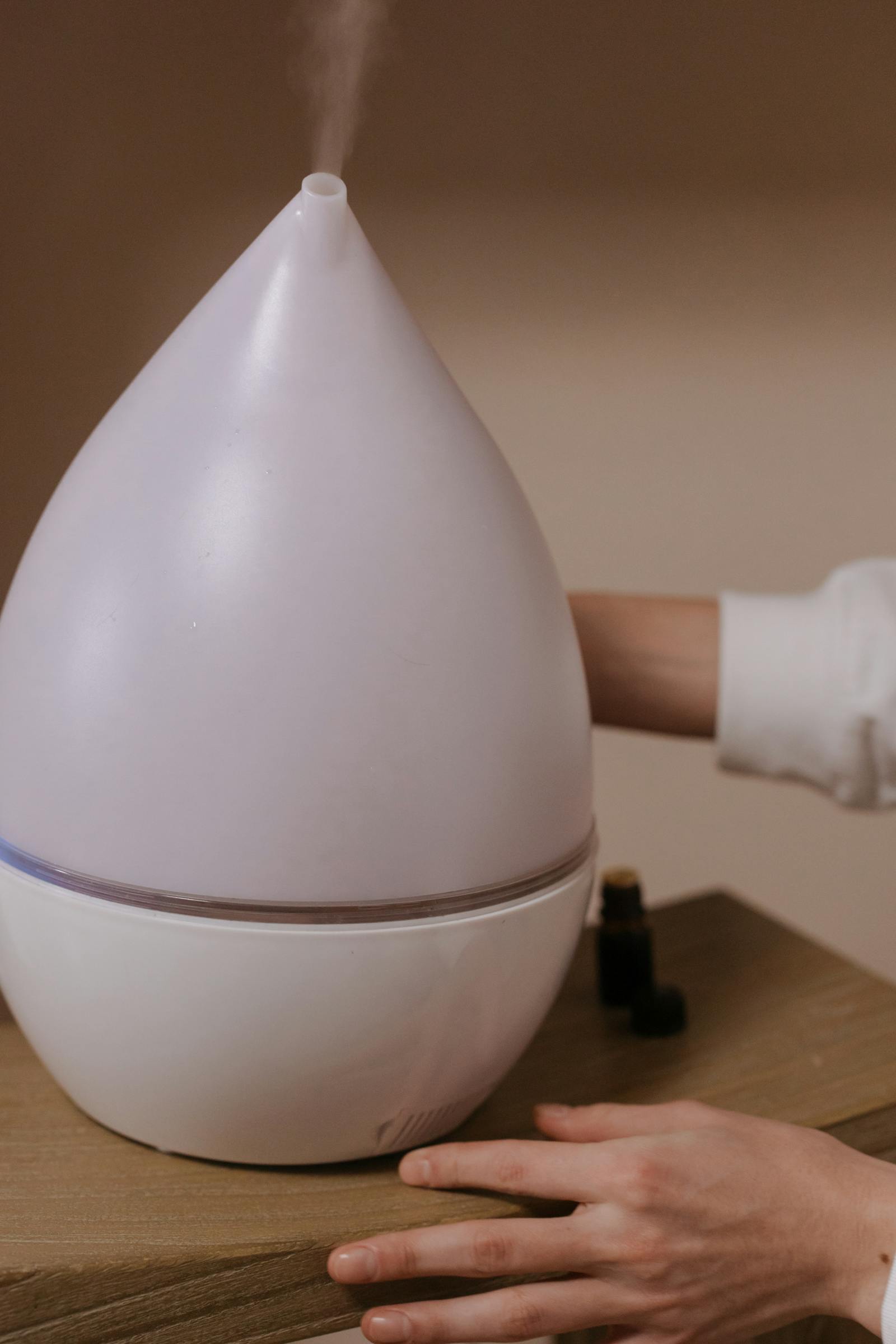
How does a Humidifier work?
In 30 seconds
Humidifier works by coordinating a few core parts around one repeatable job: reservoirs, mist, and airflow restoring moisture to dry indoor air.
- Input: power, motion, water, heat, signal, or user control enters the system.
- Control: switches, sensors, timing parts, or simple mechanisms regulate what happens next.
- Output: the object produces the useful result people notice in daily use.
How it works
A humidifier increases indoor moisture by vaporizing water and mixing it with the room air. There are several types, but the most common in homes are evaporative cool-mist and ultrasonic units. In an evaporative humidifier, a wick or filter draws water from a reservoir upward by capillary action. A fan blows air across the damp wick, picking up water molecules and dispersing them as mist. Because the air is dry, it can accept more moisture before reaching saturation, so the evaporation never stops until the humidity rises enough to slow it down.
Ultrasonic humidifiers skip the wick and rely on a piezoelectric transducer. The transducer vibrates at ultrasonic frequencies, creating microscopic droplets that shoot upward through the dome. These droplets are already airborne, so a fan or natural convection spreads them throughout the room. Because the water does not need to boil, ultrasonic units stay cooler and quieter, but they also require clean water or filters to avoid spraying minerals or microbes into the air.
Warm-mist or steam humidifiers heat water to a boil before releasing the vapor. The heating element heats the water, producing steam that flows out of a nozzle. This style kills most bacteria and adds a gentle heat source, making it useful in cold rooms, but it does require more electricity.
Key components
- Water reservoir: Stores the water that the humidifier will vaporize.
- Wick/filter (cool mist): Absorbs water and provides surface area for evaporation.
- Piezoelectric transducer (ultrasonic): Vibrates at high speed to atomize water.
- Heating element (warm mist): Boils water when steam is desired.
- Fan: Circulates air through the moist area so humidity reaches the room.
- Humidity sensor/control: Monitors moisture levels and turns the unit on or off.
Control & comfort
Built-in hygrometers gauge relative humidity, usually aiming for a comfortable range between 40% and 60%. When the room is dry, the controller keeps the motor or transducer running, but once the target is reached the humidifier pauses to prevent condensation on windows. A timer or night mode can lower fan speed so the white noise is quieter while you sleep.
The fan speed affects how evenly the moisture spreads. Some models include a diffuser or nozzle that rotates to target corners or beds. Because ultrasonic models atomize the water directly, they need demineralization cartridges or distilled water; otherwise, the airborne mist deposits fine dust on surfaces.
Warm-mist units require little filtration because boiling kills most microorganisms, but they still have safety cutouts to prevent the heater from running dry. Many humidifiers now integrate with smart home systems, letting you set schedules, remote-start them, or adjust their output from a phone.
Maintenance & why it matters
Regular cleaning keeps bacteria and mineral scale from building up. Empty and rinse the reservoir daily; once a week, clean the base with a vinegar solution and replace filters or cartridges. When not in use, let all parts dry completely to prevent mold. Ultrasonic units should have their nozzles wiped to avoid clogging, while evaporative models need their wick replaced periodically.
Humidifiers help keep indoor air from becoming uncomfortably dry, which can reduce static electricity and make heated winter rooms feel less harsh. Whether they rely on evaporation, vibration, or heat, they are practical moisture-control devices built around a simple job: adding water vapor to the air.
Explore more of the library
Jump into the full archive or browse a topic hub if you want to keep following related objects and mechanisms.